Advancing EQUIST for Global Health Decision-Making
Project Description
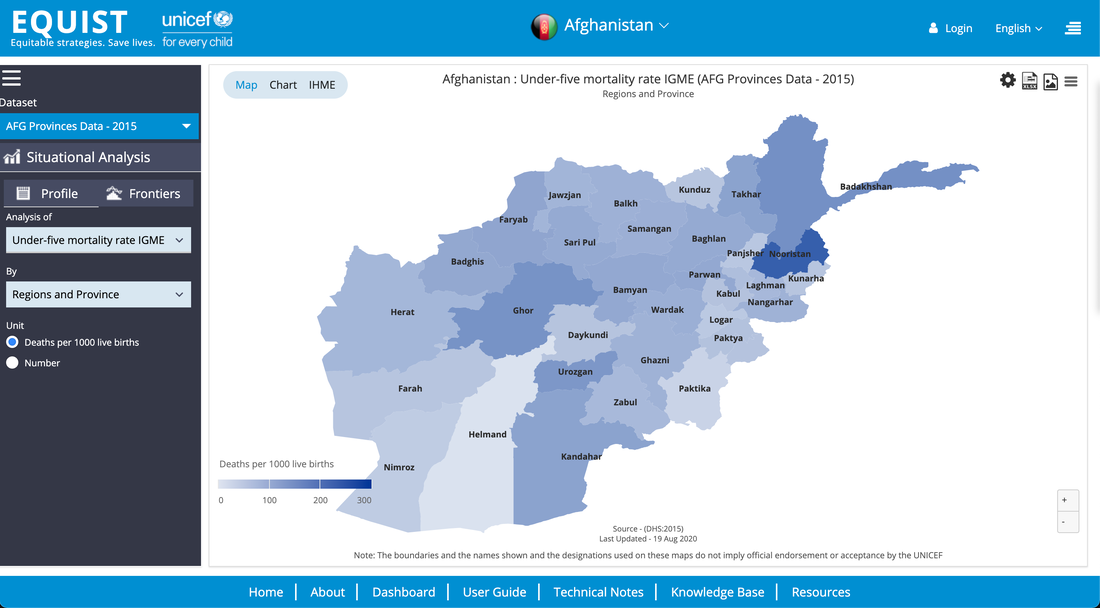
CSF in partnership with UNICEF, has enhanced the EQUIST (Equity-focused Information System for Health) platform to strengthen global and national capacity for evidence-based health planning. The new developments expand EQUIST’s analytical scope to address critical areas of maternal and child health, primary health care (PHC) costing, and the impact of health emergencies on service delivery.
To support UNICEF’s Maternal and Newborn Tetanus Elimination (MNTE) strategy, CSF developed the MNTE Risk Analysis Module, enabling national decision-makers to identify geographic areas at high risk of tetanus and prioritize interventions for the most vulnerable populations.
In response to global health crises such as COVID-19, Ebola, Polio, and Cholera, CSF introduced the Disruption of Health Services Module, allowing users to model how emergencies affect health service delivery using subnational data.
To further strengthen resource allocation and planning, CSF also developed the PHC Costing Module, which supports countries in calculating the additional costs of scaling up primary health care services—helping policymakers make informed financial decisions.
Finally, to ensure data timeliness and usability, the Automatic New Dataset Detection feature was implemented, enabling EQUIST to automatically integrate the latest national and subnational surveys, allowing real-time analyses across 40+ countries.
- Expanded EQUIST with three new analytical modules: MNTE Risk Analysis, Disruption of Health Services, and PHC Costing.
- Enabled countries to analyze subnational health service disruptions and model mitigation strategies.
- Supported MNTE strategic planning by identifying high-risk regions and target populations.
- Facilitated PHC costing analysis across 40 countries to inform health financing strategies.
- Automated data integration through real-time dataset detection, ensuring continuous system updates.
- Strengthened global health system resilience and data-informed planning for UNICEF and partner countries.
- EQUIST has been updated to feature a more user-friendly design and the ability for users to get notifications, when new data surveys are available
- The new PHC Costing Module will enable governments to analyze the costs of expanding primary health care services